20 Handy Facts For Choosing Floor Installation
Wiki Article
How Much Is Floor Installation In Philadelphia?
Prices for flooring costs in Philadelphia are one of those areas that have wildly different figures depending on where you check -- and most of what's published online is typically national average data which doesn't accurately reflect local labor rate or is obscure enough to prove useless when you're actually trying to estimate the cost of a job. The Philadelphia metro has its own pricing dynamics: Union-adjacent markets for labor, ageing housing inventory that frequently results in subfloor surprise, and a wide swath of the cheapest flooring installers and licensed contractors that are insured. This is a basic breakdown of what the installation cost is across the city and surrounding counties today.
1. LVP Installation Is Your Most Affordable Starting Point
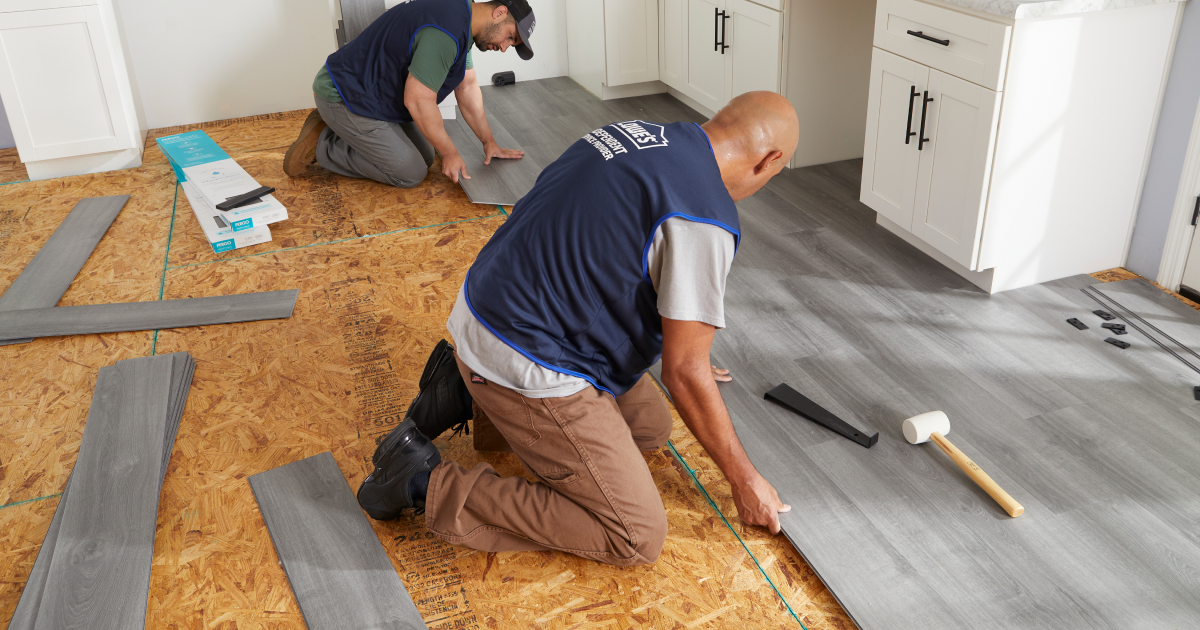
Luxury vinyl plank is consistently one of the lowest-cost options for installation in Philadelphia. Most LVP flooring installers have their prices at between $2.50 in the range of $4.50 per square foot, for labor only with mid-range LVP material costing a further $2 to $5 on a square foot. In all, a typical room will cost $4.50 to $9 per square foot installed. It's fast to lay, needs minimal preparation of the subfloor most cases, and the floating method can cut labor time dramatically compared to nailing down or glue-down options.
2. Hardwood Installations Cost More -and with good reason.
Solid hardwood installation in Philadelphia generally costs between $6 and $11 per sq ft of labor, depending upon the method of installation employed and on who is the installer. Nail-down hardwood can be considered to be at the upper end of the scale because it requires greater preciseness, the proper subfloor depth and longer installation time. Glue-down hardwood on concrete slabs also adds costs to adhesive. The type of wood used for glue-down varies greatly (budget hardwood starts at about $3 per square foot however premium species such white oak and hickory may increase the price from $10 to $14 per square foot before a nail is inserted.
3. Refinishing hardwood is more affordable than Replacement The majority of the time.
If the floors you have are structurally sound Floor sanding and finishing in Philadelphia typically costs between $3 and $5 per square foot -much less than ripping up and reinstalling. Custom wood staining for refinishing adds cost but is still cheaper than new installation. The caveat is that floors that have been refinished a number of times with significant water damage or aren't strong enough to be used again aren't ideal feasible candidates. A thorough evaluation by a certified flooring expert will let you know which side of the fence you're on.
4. Tile Installation Carries a Higher The Cost of Labor
Ceramic tile installation and porcelain is one of the more labor-intensive flooring categories. Philadelphia flooring companies usually charge between $7 and $14 per square foot of tile installation while porcelain is at the higher end due the cutting difficulty. A large size tile with diagonal lines, and bathroom tile installations with borders or niches, push costs further. Costs for materials vary between $1.50 /square foot of basic ceramic and $15 to $15+ for premium or premium-quality porcelain. If you've been offered a price that's not quite right Ask specifically what's included.
5. Laminate Installation Its Fall Between LVP and Hardwood
Laminate flooring installed in Philadelphia generally ranges between $3 to $6 per square feet of flooring which is the materials you can include at the price point of the budget. It's a floating floor like LVP, so labor costs are comparable, however, laminate tends to be more unforgiving on rough subfloors, and is more prone to moisture -- which affects where it's most likely to move in a Philadelphia home. Low-cost flooring installation quotes typically involve laminate, and it's not always the right decision depending on the location.
6. Subfloor Repair Is A Wildcard It catches homeowners off guard
This is the item that blows budgets the most frequently. Subfloor repair in Philadelphia and other areas -- patching levels, repairing rot, or replacing sections of an old board subfloor is typically about $1 to $3 per square foot, on top of the flooring installation costs, and sometimes more. Older homes in Kensington, Germantown, West Philly, and similar areas are particularly susceptible to this. Flooring estimates that don't include a subfloor study prior to giving you a final quote is to be viewed with caution.
7. The Place of Your Residence Within the Metro The location of your business can affect the quote you receive.
The costs for flooring installation cost in Bucks County, Montgomery County, Delaware County, and South Jersey aren't dramatically different from Philadelphia the main city, but there are a few variations. Suburban contractors sometimes have lower costs of overhead, while city jobs sometimes charge access and parking. If you're looking at quotes from different counties, be sure you're looking at similar things included. For instance, materials including subfloor prep furniture transport, and haul-away are handled differently by different contractors.
8. Getting Multiple Free Flooring Estimates Is Non-Negotiable
Most trustworthy flooring contractors in Philadelphia offer free estimates. Take at least three quotes before agreeing to anything. The difference between the cheapest and highest quotation for similar work is usually 30-40 percent and the cheapest price is not always the best choice or an expensive quote always the most effective. What you're evaluating is whether you can tell whether the contractor really assessed your subfloor, comprehended the details of the job and priced accordingly.
9. Engineered Hardwood Hits a Useful Mid-Price Point
Engineered hardwood flooring in Philadelphia typically runs $5 to 9 per sq ft installed less than solid hardwood, more than LVP, and comes with properties that make it the best choice in a majority of situations. It's a good idea to ask any flooring professional you talk with about including some engineered options on their price if you're split between vinyl and solid wood plank.
10. The lowest price rarely comes into Connection with the Actual Job
Experienced Philadelphia homeowners can tell you this story from personal experience. A price that is significantly under market usually indicates that something is missing -- subfloor work bases, transitions and baseboards or proper material acclimation. Flooring contractors with a license incorporate these factors into their estimates as they know that the job requires them. Budget managers who aren't licensed will make them available to win the bidding, and then provide these as additional items once the work has begun. In writing, list everything before anyone starts pulling up your existing floor. See the best
flooring contractors Bucks County for more recommendations including laminate flooring installation Philadelphia, luxury vinyl plank installation Philadelphia, porcelain tile installation Philadelphia, floor installation Bucks County PA, hardwood floor resurfacing Philadelphia, tile flooring contractors Philadelphia PA, luxury vinyl flooring Philadelphia, flooring contractors Bucks County, cheap flooring installation Philadelphia, ceramic tile flooring Philadelphia and more.

Waterproof Flooring Options For Philadelphia Bathrooms
Bathrooms are where flooring decisions have the lowest margin for error. The majority of rooms in the Philadelphia home can be able to tolerate flooring that's water-resistant -- a bathroom cannot. Showers' steam, the water around the base of the toilet as well as splash zones in sinks and the general humidity bathrooms that are closed will show every defect in a flooring material but it's still not waterproof. Philadelphia homes also have other issues for older subfloors that might contain moisture as well as bathrooms that were not renovated since the 1970s and in a number of rowhomes, bathrooms placed above living spaces where flooring failure means that there is a ceiling problem down. What actually does and doesn't work, and what to ask before putting the bathroom floor in.
1. Porcelain Tiles are the Benchmark Everything Else Gets Compared To
There's a reason porcelain tile has been the preferred bathroom flooring for decades since it's impervious against water at the tile surface, handles humidity and steam without degrading after proper installation and grout sealing it will beat all other alternatives in a wet environment. Porcelain tile installation in Philadelphia bathrooms is the one that has the longest documented track record. The downsides are very realcold underfoot, tough joints, and grout maintenance necessary -- but there's no other product that matches its waterproofing capabilities and long-lasting durability in a bathroom environment.
2. Ceramic Tile Is a Legitimate Step Down, But Not a Suitable Alternative
They are often talked about interchangeably, but they're not the same thing in the bathroom. This is because porcelain has a higher level of porousness than ceramic, which can be a problem in a bathroom where humidity is more constant than periodic. In a powder room or guest bathroom with minimal usage, ceramic tile flooring is a reasonable and more affordable choice. For a primary bathroom in a Philadelphia house that has daily shower use, the density and resistance to moisture of porcelain are worth the additional cost for each square foot. The procedure for installing is similar however the performance over time isn't.
3. LVP is the Most Practical water-proof alternative to tile
Luxury vinyl flooring has earned its place as a bathroom flooring option. The flooring itself is 100% waterproof. The main does not absorb water, the surface isn't affected by the presence of moisture. It's also warmer and more comfortable underfoot than tile. One of the caveats to install in bathrooms is that LVP's water-proofing applies to the floor planks alone, as opposed to the seams between the planks. In a bathroom that has significant water exposure -- for instance, a walk-in shower, without a proper barrier, or a tub that is freestanding the water could make across planks until it eventually reach the subfloor. Proper installation technique and seam seals are essential more than any other space.
4. Laminate in the Bathroom is A Mistake You'll regret
This needs to be stated without ambiguity since laminate shows when estimating bathroom flooring typically due to its price. Laminate has a core of wood fiber. The continuous bathroom and the wood fiber moisture are incompatible. The edges get bigger, the seams rise, and the surface layer splits, and damaged areas accelerate in bathrooms more quickly than any other room of the home. A cheap flooring installation that installs laminate in a Philadelphia bathroom is not a bargain -- it's the replacement of a job delayed by a couple of years. Any flooring expert who recommends laminate as a primary bathroom flooring is to be directly inquired about the reasons.
5. The Subfloor under a Philadelphia Bathroom is in need of an honest assessment
Older Philadelphia rowhomes and suburban colonials frequently have bathrooms with subfloors that already have water history, such as previous leak staining, soft spots resulting from years of exposure to water or original board subfloors that have held more water than they could over the course of time. Installing a new, waterproof floor over a compromised subfloor doesn't solve what's wrong, it is merely covering it up while it continues to weaken. Subfloor repairs in Philadelphia bathrooms before the new flooring is laid down isn't an add-on, it's necessary for the floor to perform as it should and not fail too early.
6. Floor Heating Compatibility varies based on Material
Radiant floor heating on bathrooms -- which is becoming sought-after during Montgomery County and Delaware County home improvements -- isn't appropriate for every flooring material. Porcelain tile carries and holds heat well, making it the ideal material for a heated subfloor. LVP is well-suited for radiant heat, but is subject to temperature thresholds and needs to be abided by -- excessive heat can result in the dimensional instability. In the event that bathroom floor heating is part of your renovation project, the flooring material selection as well as the heating system's requirements need to occur in a dialogue with each other, not in isolation.
7. Bathroom Tile Layout Can Affect Both Look and Water Management
This is the aspect that differentiates seasoned tile flooring installers from those who simply know how to set tiles. Bathroom floors need a slight slope to the drain, usually 1/4 inch per foot -- to prevent standing water. Tile layout that doesn't account of this or that competes with it with large format tiles that bridge the slope creates problems with pooling that eventually make through the subfloor. The conversation about layout with your contractor should focus on how the tile pattern interacts with the location of the drain, not just how it looks on paper.
8. Grout Selection in Bathrooms is an important choice
The standard sanded grout that is used in bathrooms needs sealing at installation and periodic resealing throughout its life. Epoxy grout -- which is more dense to install, more costly and more difficult to set upis completely impervious staining and moisture, and doesn't require sealing. For Philadelphia bathrooms with tile installation, where the homeowner is looking for low maintenance epoxy grout is worth the additional cost in labor. If homeowners are committed to regular maintenance of grout, traditional grout that has been sealed in a satisfactory manner. What isn't working is regular grout which doesn't get sealed in a humid bathroom condition.
9. Small Format Tiles Help Bathroom Floor Slopes Better
The trend towards large format tiles, such as 24x24 and larger -- which works well in living spaces and kitchens is a problem for bathrooms. Larger tiles are harder to place on drains, without creating visible unevenness. They require exceptionally flat subfloors to prevent lippage. Tiles with smaller sizes (12x12 and lower or mosaic tiles conform to the contours of a bathroom floor better, can manage the drain slope more gracefully and have greater grout lines, which enhance slip resistance when wet. Philadelphia tile flooring contractors with extensive experience in bathroom installations will speak to this issue prior to the finalization of layout choices.
10. Bathroom Floor and Wall Tiles Must Be Specificated Together
An error that can cause an aesthetic remorse more than practical issues, but it's an error to avoid. Tiles for the bathroom floor and wall tile interact visually inside a small space in ways that are difficult to understand by looking at samples on their own. Pattern direction, scale, grout color, as well as the finish all have to be thought of together. Flooring contractors who also do the installation of bathroom tiles Philadelphia work could coordinate this. Contractors who deal with only the floor, and leave the wall tile to an independent contractor create a scenario where the final result appears as though two people took decisions independently -- because they did. Check out the top Read the top rated cheap flooring installation Philadelphia for blog recommendations including vinyl plank flooring Philadelphia PA, hardwood floor resurfacing Philadelphia, hardwood floor refinishing Philadelphia, porcelain tile installation Philadelphia, ceramic tile flooring Philadelphia, flooring installation Philadelphia, laminate flooring installation Philadelphia PA, ceramic tile flooring Philadelphia, floor installation Bucks County PA, solid hardwood floor installation Philadelphia and more.